Geothermal Systems vs. Water Wells: A Practical Drilling Comparison for Commercial Decision-Makers in 2024
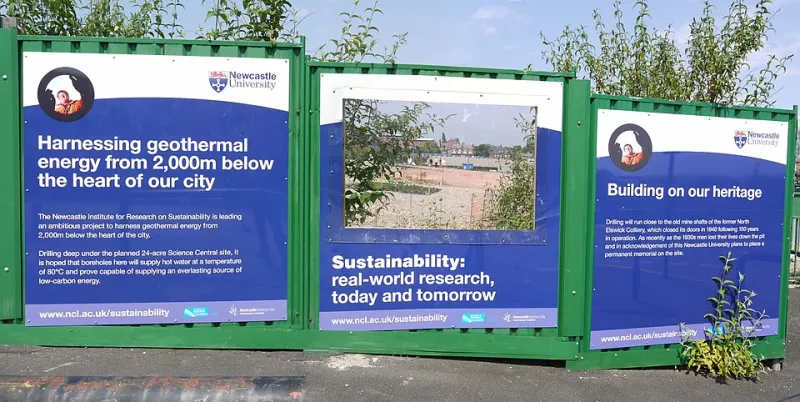
Photo: Andrew Curtis, CC BY-SA 2.0, via Wikimedia Commons
When commercial developers and facility managers think about what lies beneath their properties, they are increasingly considering two distinct categories of subsurface investment: water well systems and geothermal heating and cooling infrastructure. Both require precision drilling. Both involve significant capital commitments. And both offer long-term operational returns that can substantially outperform alternative approaches. However, they serve fundamentally different purposes, carry different cost structures, and perform differently depending on where in the United States your project is located.
This comparison is designed to give commercial decision-makers a clear, side-by-side framework for evaluating these two options — not as competitors in every case, but as distinct tools that serve specific operational objectives.
What Each System Actually Does
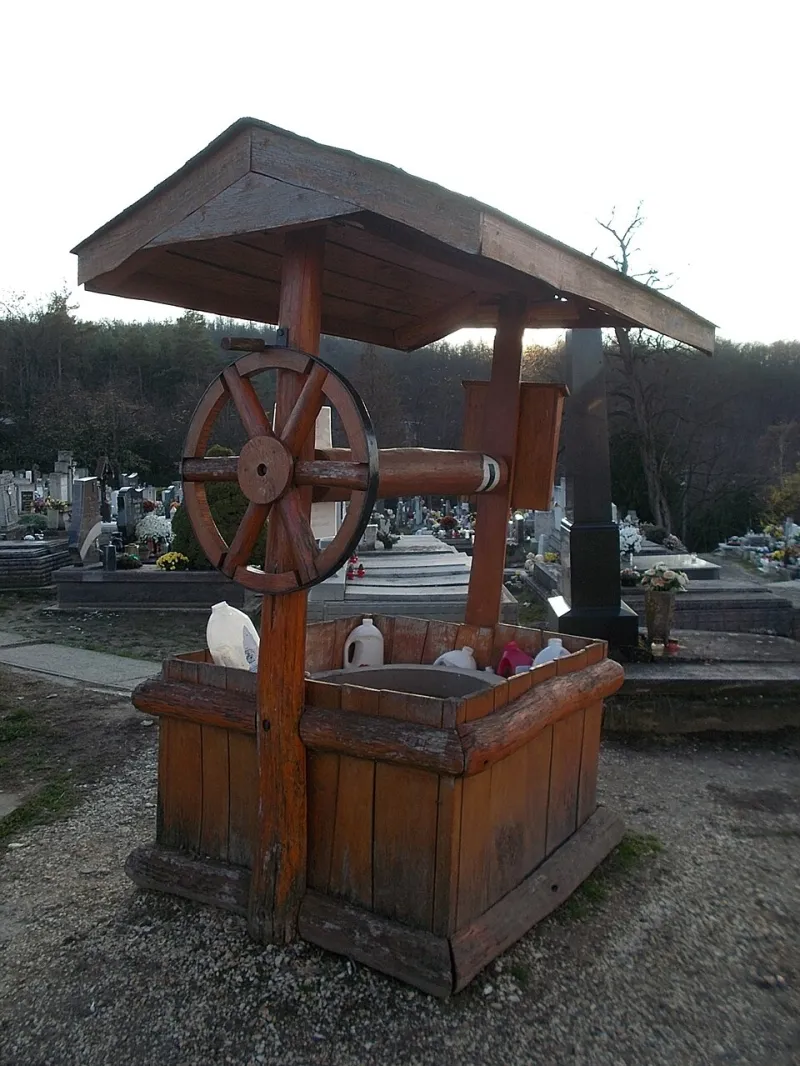
Water Wells provide a direct supply of groundwater for commercial use. Depending on the application, that may mean potable water for a facility's occupants, process water for industrial or agricultural operations, irrigation supply for landscaping or turf management, or fire suppression system support. The well taps a subsurface aquifer, and a pump system brings water to the surface for distribution.
Geothermal Systems — specifically ground-source heat pump systems — use the earth's stable subsurface temperature (typically between 50°F and 60°F across most of the continental US) as a thermal exchange medium. In winter, the system extracts heat from the ground to warm a building. In summer, it transfers excess building heat back into the ground. The drilling component creates vertical bore fields (or in some configurations, horizontal loops) that house the heat exchange fluid circuits.
These are not interchangeable systems, and the decision between them is rarely an either/or proposition in the strictest sense. Many commercial properties require a water supply well regardless of their HVAC choices. The more common decision point is whether to supplement or replace a conventional mechanical HVAC system with geothermal infrastructure.
Drilling Requirements: Depth, Diameter, and Complexity
Water Wells
- Typical depth range: 100 to 800+ feet, depending on aquifer location and yield requirements
- Borehole diameter: Generally 6 to 12 inches for commercial production wells
- Number of boreholes: Typically one primary production well, sometimes supplemented by monitoring wells
- Key technical considerations: Aquifer identification, casing depth, screen interval design, grouting
- Drilling method: Rotary air, mud rotary, or cable tool depending on formation geology
Geothermal Bore Fields
- Typical depth range: 150 to 400 feet per bore, depending on thermal conductivity of local geology
- Borehole diameter: Typically 4 to 6 inches
- Number of boreholes: Highly variable — small commercial systems may require 5 to 10 bores; large facilities may require 50 or more
- Key technical considerations: Thermal conductivity testing, bore spacing, grout thermal properties, loop field design
- Drilling method: Rotary with specialized grouting protocols for thermal efficiency
Takeaway: Geothermal projects involve more individual boreholes of smaller diameter, while water wells typically involve fewer, larger-diameter boreholes drilled to greater depths. Both require precision execution, but the site footprint and mobilization logistics differ considerably.
Upfront Cost Comparison
Cost figures in commercial drilling vary substantially based on regional geology, site access conditions, system scale, and local permitting requirements. The following ranges reflect typical 2024 commercial project costs across the US market.
Water Well Installation
- Small commercial well (under 50 GPM): $25,000 – $75,000
- Mid-size commercial well (50–200 GPM): $75,000 – $200,000
- High-yield municipal-grade well: $200,000 – $500,000+
- Primary cost drivers: Depth to aquifer, formation hardness, casing and screen materials, pump system
Geothermal Bore Field Installation
- Small commercial system (under 20 tons): $50,000 – $120,000
- Mid-size commercial system (20–100 tons): $150,000 – $500,000
- Large commercial or campus system: $500,000 – $2,000,000+
- Primary cost drivers: Number of bores, depth per bore, local geology, heat pump equipment, loop piping and manifolds
Takeaway: For smaller commercial applications, water well installation carries a lower upfront cost. As building size and HVAC load increase, geothermal bore field costs scale significantly, though the operational savings potential scales in proportion.
Environmental Profile
Water Wells
Properly installed and maintained commercial water wells carry a relatively low environmental footprint. They draw from renewable groundwater resources without combustion emissions and eliminate dependence on municipal water infrastructure. Potential environmental concerns — aquifer depletion in high-demand areas, contamination risk from improper installation — are manageable with professional design and regulatory compliance.
Geothermal Systems
Ground-source heat pump systems are among the most environmentally favorable commercial HVAC solutions available. They produce no on-site combustion emissions, reduce building energy consumption by 30 to 60 percent compared to conventional systems according to Department of Energy data, and utilize a renewable thermal resource. The primary environmental consideration is the refrigerant used in the heat pump equipment, which is subject to EPA regulations under the Clean Air Act.
Takeaway: Both systems offer meaningful environmental advantages over conventional alternatives. Geothermal carries a stronger sustainability profile for HVAC applications, while water wells provide a responsible alternative to municipal supply dependence.
ROI Timeline and Operational Economics
Water Wells
- Payback period: Highly variable; commercial properties paying high municipal water rates may see full payback within 3 to 7 years
- Ongoing costs: Pump maintenance, periodic water quality testing, occasional rehabilitation
- Operational life: 25 to 50+ years with proper maintenance
Geothermal Systems
- Payback period: Typically 7 to 15 years for commercial installations, depending on energy costs and system scale
- Ongoing costs: Heat pump maintenance, loop fluid monitoring; no fuel costs
- Operational life: Ground loop systems are rated for 50+ years; heat pump equipment 20 to 25 years
Takeaway: Water wells generally offer faster payback for facilities with significant water consumption needs. Geothermal systems carry longer payback horizons but deliver substantial energy cost reduction over their operational lifetime.
Regional Considerations Across the US
Northeast and Midwest: Both systems perform well. Dense rock formations provide excellent geothermal conductivity. Shallow aquifers in many areas support cost-effective water well installation.
Southeast: High groundwater availability makes water well installation attractive. Geothermal performance is strong due to moderate subsurface temperatures, though humid climate reduces some heating efficiency gains.
Southwest and Mountain West: Water well installation may be more complex and costly due to deeper aquifer depths in arid regions. Geothermal performance is excellent in areas with favorable geology, and the energy savings on cooling loads are particularly significant.
Pacific Northwest: Abundant groundwater resources support water well installation across much of the region. Geothermal systems benefit from mild climate conditions that reduce peak thermal loads.
Decision Criteria: Choosing the Right System for Your Project
Use the following framework to guide your evaluation:
- Choose a water well if your primary need is a reliable, cost-effective water supply independent of municipal infrastructure
- Choose geothermal if reducing long-term HVAC energy costs and carbon footprint are primary operational objectives
- Consider both if your facility has significant water supply needs and a large HVAC load that would benefit from ground-source thermal exchange
- Consult a qualified drilling contractor before finalizing either decision — site-specific geology, aquifer availability, and local regulatory requirements will materially influence which solution is technically and economically viable for your specific location
At Salem Bore Wells, we bring the technical depth and regional experience to help commercial clients navigate these decisions with confidence. Whether your project calls for a precision-drilled production well, a geothermal bore field, or a combination of both, our team is equipped to deliver installations that perform reliably for decades.