The True Price of Inferior Commercial Well Installation: What Every Developer Needs to Know Before Breaking Ground
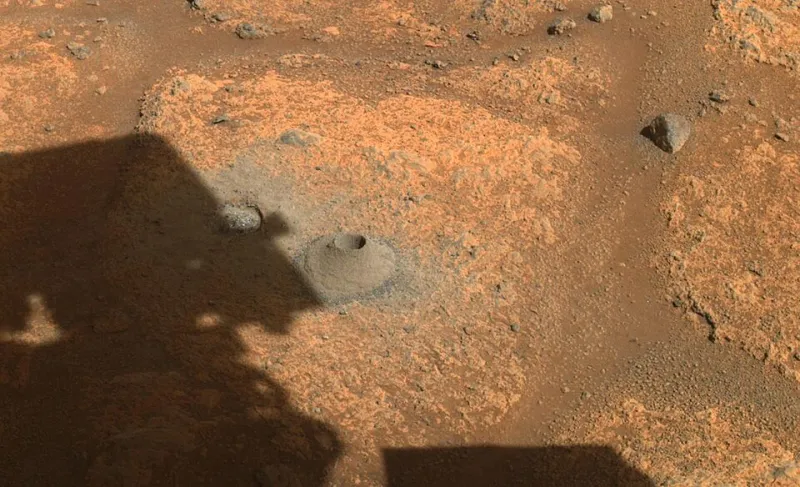
Photo: NASA/JPL-Caltech, CC, via Wikimedia Commons
Let's be direct about something the commercial development industry rarely discusses openly: a significant portion of the well-related problems that facility managers and property owners face in the years following project completion are entirely preventable. They trace back to decisions made — or avoided — during the original installation phase. Choosing the lowest bid, bypassing site-specific hydrogeological analysis, skimping on casing materials, or rushing through grouting procedures are choices that carry consequences. Those consequences rarely announce themselves immediately. They accumulate quietly, then surface at the worst possible moments: during peak operational demand, during a regulatory inspection, or during a transaction due diligence review.
This is not a theoretical concern. It is a pattern that commercial drilling professionals observe repeatedly across project types, property classes, and geographic markets. Understanding where these failures originate — and what they ultimately cost — is essential knowledge for any developer, facility manager, or commercial property owner making decisions about groundwater systems.
The Lowest-Bid Trap
Competitive bidding is a legitimate and necessary part of commercial project procurement. The problem arises when bid evaluation focuses exclusively on the initial installation price without accounting for the full scope of what that price does — and does not — include.
Low-bid drilling contractors frequently achieve their pricing advantage through one or more of the following compromises: thinner-gauge casing materials, abbreviated grouting programs, reduced development time, or the use of older equipment with wider drilling tolerances. Each of these shortcuts introduces specific failure risks that may not manifest for months or years, but that will eventually require intervention.
The cost of that intervention rarely resembles the amount saved during procurement. Emergency well rehabilitation — including pull-and-replace operations on failed casing strings — can run anywhere from $40,000 to well over $150,000 on commercial-scale installations, depending on depth, site access, and the extent of aquifer damage involved. That figure does not include operational downtime, water supply replacement costs during rehabilitation, or any regulatory penalties that may apply.
Regulatory Compliance: A Non-Negotiable Dimension
Commercial water wells in the United States are subject to a layered regulatory framework that includes federal Safe Drinking Water Act provisions, state well construction standards, and in many jurisdictions, county or municipal permitting requirements. These standards govern everything from minimum casing depth and grout seal specifications to setback distances from potential contamination sources.
A well installed by a contractor who is either unfamiliar with applicable standards or deliberately cutting compliance corners creates significant legal exposure for the property owner. State environmental agencies conduct periodic inspections of commercial water supply systems, and deficiencies identified during those reviews can result in mandatory remediation orders, fines, and in serious cases, operational shutdowns.
Property transactions involving commercial facilities with non-compliant wells face additional complications. Environmental due diligence reviews conducted during acquisitions will flag regulatory deficiencies, and the cost of bringing a non-compliant well into conformance — or replacing it entirely — becomes a transaction negotiating point that can delay or derail deals.
Casing and Grouting Failures: The Most Expensive Shortcuts
Of all the technical decisions made during commercial well installation, casing selection and grouting program design carry the highest long-term consequence for improper execution. The casing is the structural backbone of the well — it isolates the production zone from surface contamination, supports the borehole walls, and houses the pump assembly. Grout seals protect the annular space between the casing and borehole wall from surface water infiltration.
When casing materials are undersized for the formation pressures involved, or when grout seals are incomplete due to rushed placement, the results can include:
- Casing collapse or deformation that prevents pump operation and requires full well replacement
- Surface water infiltration that introduces bacteria, nitrates, or chemical contaminants into the production zone
- Aquifer cross-contamination in multi-aquifer environments where inadequate sealing allows mixing between formation layers
- Pump damage resulting from sand infiltration through compromised screens installed with insufficient development time
Each of these failure modes is well-documented in commercial well rehabilitation records. Each is also largely preventable through proper material specification, adequate grouting practices, and sufficient well development time before the pump is installed.
The Operational Cost of Chronic Underperformance
Not all poorly installed wells fail catastrophically. Some simply underperform — delivering lower yields than the site hydrogeology would support, drawing more sediment than properly designed screen intervals would allow, or requiring more frequent pump service than wells built to appropriate specifications. This chronic underperformance is insidious because it is often accepted as normal by facility operators who have no reference point for what adequate performance should look like.
The cumulative cost of that underperformance — in energy consumption, pump replacement cycles, water treatment demands, and maintenance labor — can easily exceed the cost of a properly installed replacement well over a ten-year operational horizon. Facilities that conduct lifecycle cost analyses on their water systems consistently find that the investment gap between a precision-drilled commercial well and a budget installation narrows dramatically when measured over the full operational period.
What Proper Commercial Well Installation Actually Involves
For developers and facility managers who may not have deep familiarity with drilling operations, it is worth clarifying what a properly executed commercial well installation program includes:
- Pre-drilling hydrogeological assessment — Review of available well logs, geological surveys, and aquifer data to inform target depth, casing program design, and yield expectations
- Appropriate casing specification — Selection of casing diameter, wall thickness, and material based on formation conditions and anticipated pump requirements
- Complete grout seal installation — Placement of grout from the bottom of the surface casing to grade, with documentation of volumes placed
- Adequate well development — Sufficient time and effort devoted to developing the well to stable yield before pump installation
- Post-installation testing — Pump testing at designed yield rates, water quality sampling, and documentation suitable for regulatory submission
These are not optional elements of a premium service package. They are the baseline of competent commercial well installation. Any contractor proposing to omit or abbreviate these components in the interest of cost reduction is transferring risk — from their project budget to your facility's operational future.
The Contractor's Responsibility and the Client's Protection
Experienced commercial drilling contractors understand that their professional reputation is built on the long-term performance of the wells they install. That perspective shapes every decision made on a project — from casing selection to grouting technique to development time. It is also the perspective that protects commercial clients from the expensive consequences described throughout this article.
At Salem Bore Wells, every commercial installation we undertake is designed and executed with that long-term performance standard in mind. We welcome clients who want to understand exactly what their installation program includes and why each element matters. That transparency is not a sales tactic — it is the foundation of a professional relationship built on accountability and results.