Trenchless Technology and the Municipal Bottom Line: How Horizontal Directional Drilling Is Transforming Infrastructure Budgets
Across the United States, municipal infrastructure managers face a persistent and costly dilemma: essential utilities—water mains, fiber optic conduit, gas lines, and stormwater systems—must be installed or replaced beneath roads, rivers, and developed parcels that cannot simply be torn up without significant consequence. Traditional open-cut excavation methods have long been the default approach, but they carry well-documented drawbacks: traffic disruption, pavement restoration costs, extended project timelines, and the compounding liability of disturbing existing underground networks.
Horizontal directional drilling (HDD) has reshaped that calculus entirely. By steering a drill string through the subsurface along a calculated curved path—without breaking the surface above—HDD allows municipalities to thread utilities beneath obstacles that would otherwise require prohibitively expensive workarounds. The technology is not new, but its application has matured significantly, and the cost savings being documented across the country are difficult to ignore.
What HDD Actually Involves
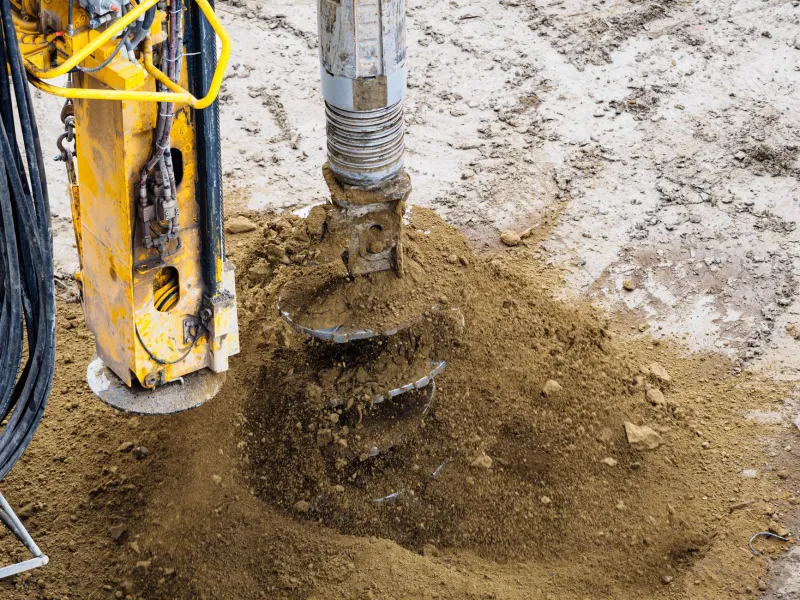
At its core, horizontal directional drilling begins with a pilot bore—a small-diameter hole drilled along a predetermined path using a steerable drill head. Operators monitor the drill's position in real time using electronic tracking equipment, making directional corrections as needed to follow the designed bore path. Once the pilot bore is complete, the hole is enlarged through a series of back-reaming passes, and the utility product pipe is then pulled back through the enlarged bore.
The precision required is substantial. A bore beneath a four-lane arterial road must account for existing utilities, soil variability, groundwater conditions, and the structural tolerances of the pipe being installed. This is not work suited to generalist contractors; it demands certified operators with direct experience in geotechnical interpretation and downhole navigation.
The Financial Case: Where the Savings Come From
The cost advantages of HDD over open-cut methods derive from several intersecting factors. Pavement restoration is frequently the most significant line item in traditional excavation projects. When a city opens a road to replace a water main, the cost of milling and repaving—often required across the full lane width under prevailing standards—can equal or exceed the cost of the utility work itself. HDD eliminates that expense entirely.
Traffic management is another area where open-cut projects generate substantial hidden costs. Lane closures require signage, flaggers, detour routing, and coordination with transit agencies. In commercial corridors, closures can trigger business interruption claims and reduce tax revenue during construction. HDD typically requires only a small staging area at each end of the bore, leaving the roadway surface intact and traffic patterns largely undisturbed.
Project timelines also compress meaningfully. A conventional water main replacement beneath a busy intersection might require four to six weeks of active construction, including excavation, bedding preparation, pipe installation, backfill, compaction, and paving. A comparable HDD installation can often be completed in a fraction of that time, reducing the duration of community disruption and accelerating the municipality's return to normal operations.
Documented case studies from across the country support these figures. A mid-sized Midwestern city that undertook a fiber optic expansion beneath a historic downtown district reported project costs approximately 35 percent lower than the engineer's estimate for conventional trenching, with the difference attributable almost entirely to avoided pavement restoration and traffic control expenditures. A coastal municipality in the Southeast used HDD to install a raw water intake line beneath a navigable waterway, avoiding the permitting complexity and environmental mitigation costs that a conventional river crossing would have entailed—a saving estimated at over 40 percent of the originally budgeted amount.
Accuracy and Safety: The Operational Dimension
Beyond the financial metrics, HDD delivers meaningful improvements in installation accuracy and worker safety. Open-cut excavation in urban environments carries inherent risk: existing utilities are frequently located imprecisely, and mechanical excavation can damage gas lines, fiber optic cables, or pressurized water mains with serious consequences. HDD's guided approach, combined with thorough pre-bore utility locating, substantially reduces the probability of third-party utility strikes.
The accuracy of modern HDD guidance systems also means that installed utilities arrive at their designed termination points with a high degree of precision, reducing the need for costly field adjustments and ensuring that connections to existing infrastructure can be made as planned. For municipal projects where tolerances are tight—boring beneath active rail corridors, for example, or threading a conduit through a congested utility vault—that precision is not merely convenient; it is operationally essential.
Regulatory and Environmental Considerations
HDD also simplifies the permitting landscape in many jurisdictions. Projects that would otherwise require stream disturbance permits, wetland mitigation plans, or highway right-of-way excavation approvals can often proceed under a less burdensome regulatory framework when a trenchless approach is employed. This is particularly relevant for municipalities pursuing infrastructure improvements near environmentally sensitive areas, where open-cut methods might trigger extensive environmental review.
Contractors must still conduct thorough geotechnical investigation prior to HDD operations. Soil conditions that include cobbles, fractured rock, or unstable sandy formations can complicate bore operations and require adjusted equipment selection or bore path design. A reputable drilling contractor will complete a soil boring program and review available subsurface data before committing to a bore plan—a step that protects both the project timeline and the client's budget.
Planning for HDD Success
For municipal planners and public works directors considering HDD for an upcoming project, several planning principles apply consistently across successful installations.
First, engage a qualified drilling contractor early in the design phase. Bore path geometry, entry and exit angles, and pipe product specifications all influence whether a proposed installation is feasible, and early contractor involvement prevents costly redesigns after bid documents are issued.
Second, invest in subsurface investigation. The cost of a thorough geotechnical study is modest relative to the risk of encountering unexpected conditions mid-bore. Municipalities that skip this step frequently encounter change orders that erode the cost advantages HDD was chosen to deliver.
Third, ensure that the contractor holds appropriate certifications and maintains current equipment. HDD technology evolves, and operators working with outdated guidance systems or poorly maintained drill strings introduce unnecessary risk into what should be a controlled operation.
Horizontal directional drilling is not a universal solution—some project geometries, soil conditions, or pipe diameters are better served by other methods. But for the broad category of urban and suburban utility installation where surface disruption carries real cost, HDD represents a compelling and increasingly well-documented approach to delivering municipal infrastructure on budget and on schedule.