Beyond the Lowest Number: Seven Vetting Questions That Separate Qualified Drillers from Expensive Mistakes

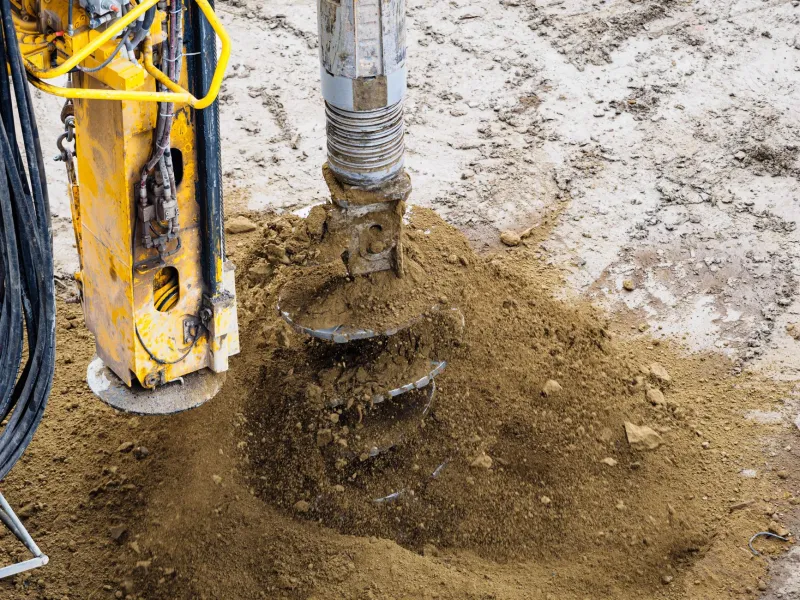
Photo by Photo by WORKSITE Ltd. on Unsplash on Unsplash
Municipal procurement is built on a simple premise: compare bids, select the lowest responsible offer, and protect the taxpayer. But when the contract involves drilling a municipal water well, the lowest number on the bid tabulation sheet can quickly become the most expensive choice a city ever makes.
A poorly executed well doesn't just cost money to fix—it can jeopardize a community's water supply, trigger regulatory penalties, and erode public trust. The remedy is due diligence that goes deeper than price. Here are seven questions every city or county manager should put to a prospective drilling contractor before the contract is signed.
1. Are You Licensed, Bonded, and Insured—Specifically for Our State?
Water well contracting is regulated at the state level, and licensing requirements vary considerably. A contractor licensed in one state may hold no legal standing in yours. Ask for the license number and verify it independently through your state's water resources or environmental agency. Confirm bonding capacity sufficient for the full contract value, and review insurance certificates—general liability, auto, and workers' compensation—noting coverage limits and exclusions. A reputable firm will produce this documentation without hesitation.
2. What Does Your Equipment Fleet Actually Look Like?
Drilling is an equipment-intensive trade, and the age and condition of a contractor's rig fleet is a strong indicator of reliability. A rig that breaks down mid-bore leaves your project idle while standby costs accumulate. Ask how old the primary rigs are, what maintenance program supports them, and whether the contractor has redundant equipment available if a mechanical failure occurs. Contractors who own and maintain their fleet—rather than depending on spot rentals—generally offer more schedule security.
3. What Experience Do You Have With Our Local Geology?
Drilling through the alluvial sediments of the Central Valley of California is a fundamentally different exercise than boring into the fractured bedrock of New England or the karst formations of Florida. Ask candidates to describe wells they've completed within your aquifer or formation, and to explain how local conditions shaped their approach. A contractor familiar with your geology will anticipate problems—lost circulation zones, artesian pressures, boulder fields—before they become change orders.
4. Can You Walk Us Through Your Safety Record?
Request the contractor's OSHA 300A logs for the past three years, EMR (experience modification rate), and written safety program. An EMR below 1.0 signals a safety performance better than industry average. Municipal job sites carry public exposure—school adjacent drill sites, traffic control, utility crossings—so ask specifically how the contractor manages site security and public safety during active operations.
5. Will You Provide References from Comparable Public Projects?
Every contractor has a polished portfolio. What matters is whether the work resembles yours. Request references from other municipal or public-agency clients, ideally within the past three to five years, and call them. Ask pointed questions: Did the project finish on schedule? Were change orders reasonable and documented? How did the contractor handle unexpected subsurface conditions? Public-sector references are especially valuable because they understand your procurement constraints.
6. What Warranty Terms Do You Offer—in Writing?
A well is a long-lived asset, and the warranty should reflect that. Look for explicit coverage of workmanship and materials, clear terms for pump and casing defects, and a defined response time for warranty calls. Vague assurances like "satisfaction guaranteed" are not warranty terms. The bid documents should specify duration, exclusions, and remedy procedures in enforceable language.
7. How Flexible Is Your Scheduling—and What Happens When Conditions Change?
Municipal projects rarely unfold exactly as planned. Grant funding cycles slip, weather intervenes, and utility relocations add weeks. Ask how the contractor handles schedule adjustments, whether they can mobilize on reasonable notice, and how they document and price changed conditions. A contractor who answers with clear processes and written procedures is one who has managed public projects before.
What Transparent Bidding Looks Like
At Salem Bore Wells, we encourage municipal buyers to ask every one of these questions—of us and of our competitors. We provide license numbers up front, detailed equipment specifications, verifiable safety data, and references from public clients who will speak candidly about our work. We believe the best municipal contracts are won on demonstrated capability, not lowest-bid arithmetic.
The well your community drinks from for the next fifty years deserves more scrutiny than a line item on a bid sheet. Ask the hard questions. Qualified contractors will welcome them.