The Coming Squeeze on Water: Why Smart Developers Are Securing Aquifer Access Now

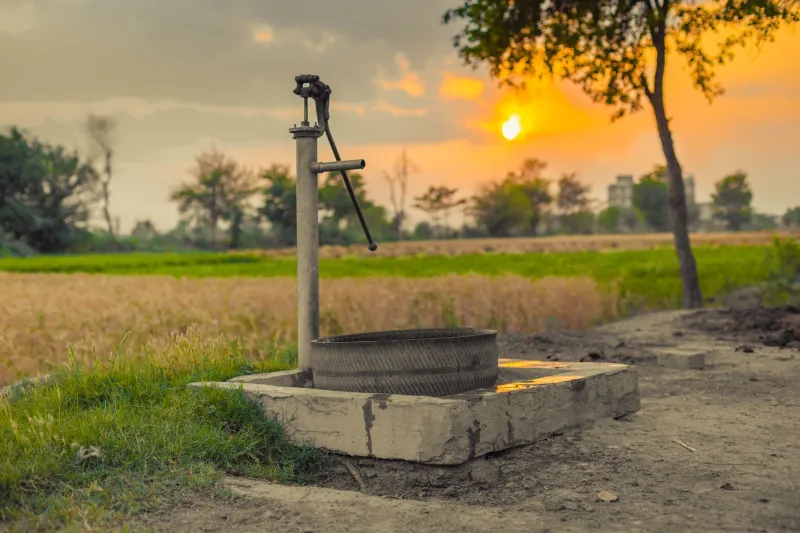
Photo by Photo by Patrick Federi on Unsplash on Unsplash
Every commercial development begins with an assumption so basic it rarely appears on a pro forma: that water will be available. In 2025, that assumption deserves a second look.
Across the Southern and Western United States, municipal water systems are grappling with a convergence of pressures—persistent drought, aging infrastructure, population growth, and shrinking allocations from stressed reservoirs. States like Arizona, Texas, and California have already imposed development-linked water constraints, and the trend lines point one direction. Meanwhile, industrial facilities, data centers, and logistics hubs—water-intensive users all—continue to expand into exactly the regions where supply is tightening.
The result is a quiet scramble forming beneath the surface of the commercial real estate market. And the developers paying attention are acting now.
Why On-Site Supply Is Moving from Backup to Strategy
Historically, a private commercial well was viewed as a contingency—a hedge against municipal service or a necessity in rural locations. That framing is outdated. For a growing class of projects, an on-site well is now a strategic asset with three distinct advantages.
First, cost predictability. Municipal water rates have risen faster than general inflation in most major US metros, and connection fees for large commercial users can run into six or seven figures. A properly designed well converts an escalating operating expense into a largely fixed capital asset.
Second, supply security. A development that controls its own water source is insulated from municipal rationing, moratoria, and allocation cuts—the very instruments many utilities are now deploying or openly discussing.
Third, entitlement leverage. In water-stressed markets, demonstrating an independent, permitted water supply can be the difference between a project that clears planning review and one that stalls indefinitely.
The Water Rights Learning Curve
Here is where many developers get tripped up: in much of the US, the water under your land is not automatically yours to pump. Water law varies dramatically by state, and understanding the regime is step one.
In prior appropriation states—much of the Mountain West—water rights follow a first-in-time hierarchy, and new appropriations may be limited or unavailable in fully allocated basins. Riparian states east of the Mississippi generally tie rights to land ownership adjacent to water sources. Texas operates under rule of capture with district-level regulation, while states like Kansas and Nebraska manage groundwater through permitting systems with sustainability tests.
The practical takeaway: water rights due diligence should occur before, not after, land acquisition. A parcel without access to a legally pumpable aquifer—or without a realistic path to a permit—carries hidden risk that no site plan will fix.
The Cost Equation, Honestly Stated
Skeptics will note that drilling is not free, and they're right. A high-capacity commercial well—engineering, drilling, casing, pump, and permitting—typically represents a meaningful capital outlay, and costs vary widely with depth and geology. But compare that one-time investment against decades of municipal water bills, connection fees, and rate escalations, and the arithmetic frequently favors independence, particularly for high-volume users.
Factor in the avoided cost of a stalled entitlement process or a production halt during a rationing order, and the case strengthens further. Water independence is, in a real sense, business continuity insurance that also pays a return.
Why Timing Matters More Than It Seems
Aquifer access is becoming competitive. As more developers recognize the value of on-site supply, drilling capacity, hydrogeological consulting, and permit queues are all feeling the strain. In some basins, new groundwater appropriations already carry multi-year waitlists. The window for securing favorable access—both legally and physically—is narrowing in the very markets where growth is strongest.
At Salem Bore Wells, we work with commercial developers across the country to evaluate aquifer potential, navigate state water law, and execute precision drilling on aggressive development timelines. Our counsel to clients is consistent: the cheapest time to secure water access was yesterday; the second-cheapest is today.
Drought, development, and demand are converging. The question facing commercial builders in 2025 is not whether water independence will matter—but whether they will secure it before their competitors do.